Understanding When and Why You Need to Drain Your Honda CR-V Fuel Tank
The Honda CR-V is one of the most popular compact SUVs worldwide, beloved for its reliability, fuel efficiency, and versatile design. From suburban families to urban commuters, millions of drivers depend on their CR-V for daily transportation. However, even this dependable vehicle can face situations requiring complete fuel tank drainage. Whether you've accidentally filled the wrong fuel type at the pump, discovered fuel contamination, need to perform critical maintenance, or are dealing with fuel system problems, understanding how to properly drain a Honda CR-V fuel tank is essential knowledge that can save you from costly engine damage and extensive repairs.
Modern Honda CR-V models feature highly sophisticated fuel systems with advanced safety features including anti-siphon devices, rollover protection valves, evaporative emission control systems, and complex fuel line routing. These engineering innovations make the CR-V cleaner, safer, and more efficient, but they also significantly complicate fuel tank drainage compared to older, simpler vehicles. This comprehensive guide explores everything you need to know about safely draining a Honda CR-V fuel tank, understanding the serious risks involved, and why professional assistance typically provides the safest, most effective, and most economical solution for most owners.
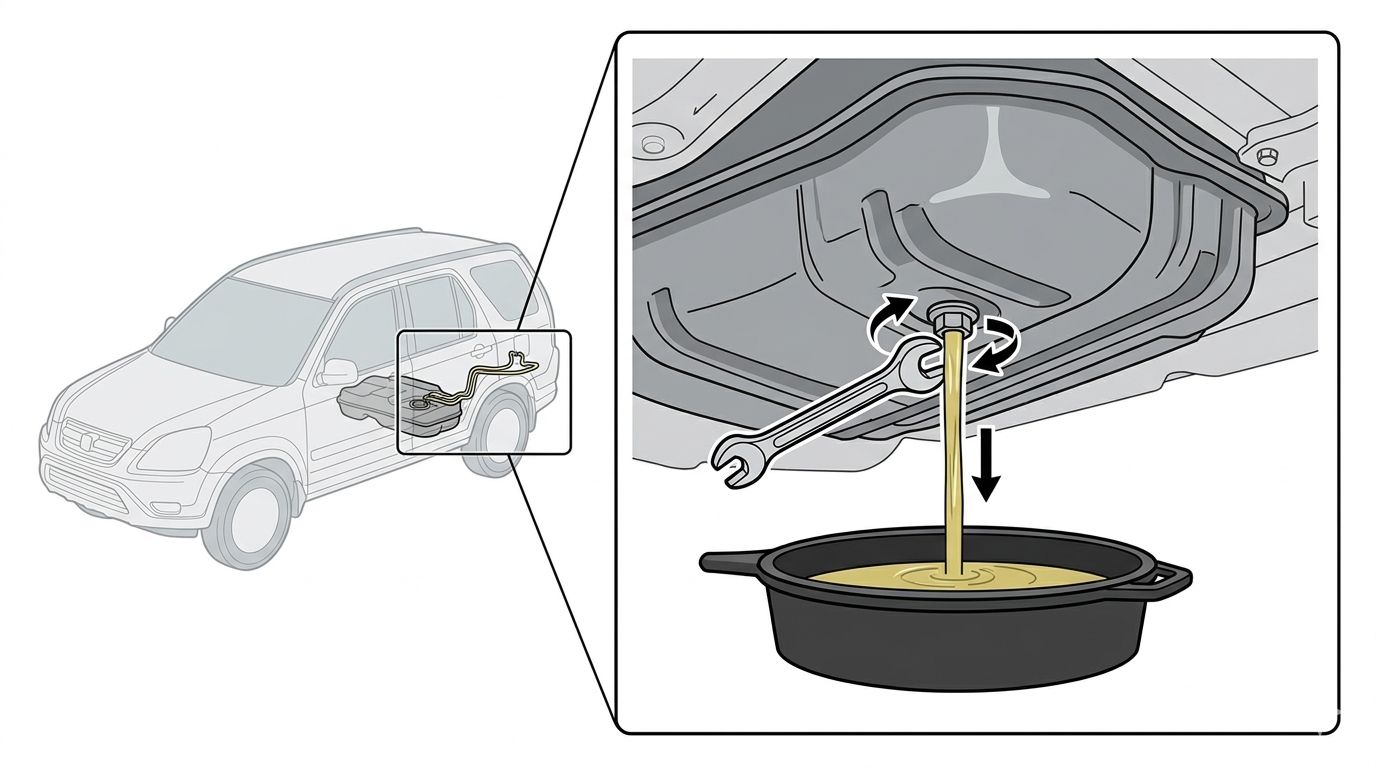
Professional Honda CR-V fuel tank drainage showing the drain plug location and correct procedure
Common Critical Reasons for Draining a Honda CR-V Fuel Tank
Wrong Fuel Contamination - The Most Urgent Emergency
The most time-critical and urgent reason to drain a fuel tank is wrong fuel contamination. While the vast majority of Honda CR-V models sold globally run on regular gasoline, diesel variants exist in certain international markets, and misfueling incidents occur with surprising regularity. More commonly, CR-V owners accidentally fill their gasoline vehicles with E85 ethanol fuel, premium diesel, or in rare cases, kerosene or heating oil mistaken for automotive fuel. Putting the wrong fuel type in your Honda CR-V creates an immediate emergency situation requiring complete fuel system drainage before attempting to start the engine or, if already started, before driving any further.
Gasoline engines, which power nearly all CR-V models in North America and most global markets, are specifically engineered for gasoline's combustion characteristics. When diesel fuel enters a gasoline CR-V, it causes severe running problems including rough idling, excessive smoke from the exhaust, misfiring cylinders, fouled spark plugs, clogged fuel filters and injectors, potential damage to catalytic converters which can cost over two thousand dollars to replace, and contamination of oxygen sensors leading to check engine lights and emission system failures.
Similarly, putting E85 ethanol fuel (designed only for flex-fuel vehicles) into a standard gasoline CR-V causes problems because standard fuel systems aren't designed for ethanol's corrosive properties and different fuel requirements. Running non-flex-fuel CR-V models on E85 can damage fuel lines, seals, and gaskets, cause poor performance and difficulty starting, and result in lean running conditions that may damage the engine over time.
The key to minimizing damage from wrong fuel contamination is immediate action. If you realize the mistake before starting the engine, you're in the best possible position. Do not turn the key or press the start button, call professional fuel drainage services immediately, and have the fuel system completely drained and flushed before operating the vehicle. Starting the engine with wrong fuel circulates contamination throughout the entire fuel system, making the cleanup process more complex and expensive.
Contaminated or Degraded Fuel Issues
Fuel contamination represents another frequent reason Honda CR-V owners need professional tank drainage. Gasoline doesn't remain chemically stable indefinitely. Fuel sitting unused for extended periods undergoes oxidation and chemical breakdown, forming varnishes, gums, and deposits that wreak havoc on modern fuel injection systems. This deterioration accelerates in warm climates and when fuel is exposed to air and moisture.
Water contamination poses a particularly serious threat to CR-V fuel systems. Water enters fuel tanks through several pathways including condensation forming inside partially-empty tanks stored in areas with temperature fluctuations, poor-quality fuel from gas stations with compromised underground storage tanks, damaged or improperly sealed fuel caps allowing rainwater ingress, and in coastal areas, humid air introducing moisture into the fuel system over time.
Water in gasoline creates multiple serious problems including phase separation where ethanol-blended fuel separates into distinct layers, corrosion of metal fuel system components including the tank, fuel pump, and injectors, microbial growth (fuel contamination by bacteria and fungi that feed on the fuel-water interface), engine misfiring and rough running as water doesn't combust properly, and potential freezing in cold weather that can block fuel lines and filters.
Contaminated fuel manifests through various warning symptoms that CR-V owners should never ignore including rough or unstable idling especially when cold, hesitation and poor acceleration when pressing the gas pedal, engine misfires particularly under load or at highway speeds, difficulty starting especially in cold weather or after the vehicle sits overnight, reduced fuel economy that becomes noticeably worse, check engine lights with fuel system related diagnostic codes, and strong fuel odors near the vehicle indicating leaks or vapor issues.
Fuel System Repairs and Component Replacement
Certain maintenance and repair procedures absolutely mandate emptying the fuel tank as a critical safety requirement before any work can begin. These situations include fuel pump replacement which is a relatively common repair on higher-mileage CR-V models, fuel tank repair or replacement due to damage from road debris or corrosion, fuel level sending unit service when your fuel gauge provides inaccurate readings, addressing fuel leaks anywhere in the system which pose serious fire hazards, fuel filter replacement on models with in-tank filters, and comprehensive tank cleaning for severe contamination cases.
Working on any fuel system component with gasoline present creates unacceptable fire and explosion hazards. Professional technicians systematically eliminate these dangers through proper fuel drainage procedures, controlled environments, and strict safety protocols that most home mechanics cannot replicate.
Long-Term Storage Preparation
Honda CR-V owners preparing their vehicles for extended storage periods exceeding two to three months face important fuel-related decisions. Many automotive experts and professional storage facilities recommend either draining the fuel tank completely or adding commercial fuel stabilizer to preserve fuel quality during dormancy. Complete drainage eliminates the risk of fuel degradation entirely, particularly important for storage periods exceeding six months or when vehicles are stored in uncontrolled temperature environments like outdoor parking or unheated garages.
Critical Safety Considerations Before Attempting Fuel Drainage
Fuel drainage represents inherently dangerous work that demands serious safety precautions and profound respect for the hazards involved. Gasoline is an extremely flammable liquid with a flash point of negative 45 degrees Fahrenheit, meaning it can ignite at temperatures well below freezing. Its vapors are heavier than air, causing them to accumulate at ground level where ignition sources frequently exist.
Fire and Explosion Hazards: Gasoline vapors can ignite from remarkably small spark sources that most people never consider dangerous. These ignition sources include static electricity discharge when sliding across vehicle seats or walking on carpets, electrical switches and outlets including light switches in garages, electric motor sparks from power tools or appliances, pilot lights from water heaters, furnaces, or dryers, hot engine or exhaust components, and even cell phones which can theoretically generate sparks in certain failure modes. A single spark in a vapor-rich environment can trigger catastrophic explosions resulting in severe burns, property destruction, and fatalities.
Toxic Vapor Exposure and Health Risks: Gasoline vapors contain benzene, toluene, xylene, and numerous other toxic compounds classified as carcinogens and neurotoxins. Breathing these vapors in enclosed or poorly-ventilated spaces causes immediate symptoms including severe dizziness and disorientation, intense headaches, nausea and vomiting, respiratory irritation and difficulty breathing, and confusion leading to impaired judgment and loss of consciousness. Long-term or repeated exposure results in serious health consequences including permanent neurological damage, liver and kidney damage, increased cancer risk particularly leukemia, and reproductive system damage.
Skin and Eye Contact Dangers: Direct contact with gasoline causes immediate skin irritation, redness, and burning sensations. Extended exposure leads to chemical burns and dermatitis. Gasoline readily penetrates skin and enters the bloodstream, potentially causing systemic toxicity. Gasoline splashed in eyes causes severe pain, vision impairment, and can result in permanent eye damage without immediate and proper emergency flushing with clean water for at least 15 continuous minutes.
Environmental Contamination and Legal Consequences: Spilled gasoline represents a serious environmental hazard. Even small amounts contaminate soil and groundwater, creating pollution that persists for years and migrates to affect neighboring properties and water sources. Improper fuel disposal violates federal Environmental Protection Agency regulations and state environmental laws, resulting in substantial fines often starting at ten thousand dollars, mandatory environmental cleanup costs that can exceed fifty thousand dollars, potential criminal charges for serious violations, and civil liability for damages to neighboring properties or water supplies.
Professional fuel drainage services utilize specialized safety equipment that most vehicle owners don't possess including explosion-proof fuel transfer pumps certified for hazardous liquid handling, industrial ventilation systems or appropriate outdoor work environments, comprehensive personal protective equipment including chemical-resistant suits, gloves, and respirators, approved fuel storage containers meeting Department of Transportation regulations, non-sparking tools made from special alloys, comprehensive liability insurance covering potential incidents, and proper training in hazardous materials handling and emergency response.
Professional Methods to Drain a Honda CR-V Fuel Tank
Professional automotive technicians and specialized mobile fuel rescue services employ several proven methods to safely drain CR-V fuel tanks, carefully selecting the most appropriate approach based on the specific situation, fuel contamination severity, vehicle model year, and whether the vehicle is at a repair facility or requires mobile service.
Method 1: Fuel Pump Access Method
The most common professional approach for Honda CR-V fuel drainage involves accessing the fuel pump assembly to drain the tank through the vehicle's existing fuel system. Honda CR-V models typically position the fuel pump inside the tank, accessible from the vehicle interior. This method involves removing the rear seat cushion which typically unclips or unbolts, locating the fuel pump access panel underneath, removing the access panel cover, disconnecting the fuel pump electrical connector to prevent accidental activation, carefully disconnecting fuel line quick-connect fittings while containing spillage, and using either a professional-grade hand pump or the vehicle's own fuel pump to transfer fuel into approved containers.
This approach offers significant advantages including no need for tank removal which saves considerable labor time, minimal risk of fuel spillage when performed correctly by trained technicians, relatively quick completion typically within one to two hours, and maintains vehicle underbody components undisturbed. However, it requires proper tools including fuel line disconnect tools specific to Honda fittings, detailed knowledge of CR-V fuel system architecture which varies by generation, and appropriate containers for safe fuel collection and storage.
Method 2: Fuel Line Disconnection Method
Another effective professional technique involves disconnecting fuel lines at strategic accessible points and using controlled pumping to transfer fuel to collection containers. Perth drivers seeking fuel rescue Perth services can rely on experienced technicians who locate accessible fuel line connection points typically near the fuel filter or fuel rail, carefully disconnect lines while immediately containing any spillage with absorbent materials, activate the fuel pump using a professional scan tool or by carefully jumpering the fuel pump relay circuit, and collect draining fuel in approved DOT-certified containers while continuously monitoring the process.
This method works particularly well for partial drainage situations or when the fuel pump remains functional and can safely transfer fuel. It's generally faster than complete tank removal but requires specific knowledge of Honda CR-V fuel system layout, proper diagnostic tools for fuel pump activation, and careful attention to prevent spills during line disconnection.
Method 3: Complete Fuel Tank Removal
For severe contamination requiring thorough internal tank cleaning, physical tank damage necessitating replacement, or situations where other methods prove insufficient, complete tank removal provides the most comprehensive and thorough solution. This extensive process involves safely lifting the vehicle on a professional hydraulic lift or heavy-duty jack stands rated for the CR-V's weight, removing heat shields and protective panels that guard the tank, disconnecting all fuel lines, electrical connections, and evaporative emission lines, detaching the fuel filler neck and associated vent hoses, removing tank mounting strap bolts or support bracket fasteners, and carefully lowering the fuel tank while managing any remaining fuel to prevent dangerous spills.
After removal, technicians drain the tank completely in a controlled environment, thoroughly inspect the tank interior for corrosion, debris, or damage, perform comprehensive cleaning using approved solvents and procedures, replace the fuel pump assembly, filters, or sending unit if needed, and reinstall the tank with all new gaskets, seals, and mounting hardware. While significantly more time-intensive and labor-heavy than other methods, complete tank removal ensures absolutely total fuel removal, permits comprehensive fuel system component inspection and replacement, allows for thorough tank cleaning or replacement, and provides opportunity to address multiple fuel system issues simultaneously.
Method 4: Mobile Emergency Fuel Drainage Service
For wrong fuel emergencies, roadside breakdowns, or situations where the CR-V cannot safely be driven, specialized mobile fuel drainage services bring professional equipment and expertise directly to your vehicle's location. This increasingly popular and convenient service includes immediate on-site response preventing you from starting the engine with contaminated fuel, complete fuel system drainage using portable explosion-proof pumps, thorough fuel line flushing to remove all contaminated fuel from every system component, fuel filter replacement when necessary to prevent contamination carryover, proper contaminated fuel disposal according to environmental regulations, system refilling with correct fuel type if the service package includes it, and comprehensive testing to ensure proper operation before the technician leaves.
Mobile services offer critical advantages particularly in emergency situations including immediate response that minimizes damage from wrong fuel contamination, elimination of expensive towing costs which can easily exceed three hundred dollars, convenience of service at your exact location whether home, workplace, shopping center, or roadside, immediate resolution getting your CR-V back on the road within hours rather than days, and peace of mind knowing professionals handled the emergency correctly.
Why Professional Assistance is Strongly Recommended
While some mechanically-skilled Honda CR-V owners consider attempting DIY fuel drainage to save money, numerous compelling factors make professional service the strongly recommended choice for the vast majority of situations, particularly for wrong fuel emergencies where time is critical.
Specialized Safety Equipment and Expertise: Professional services utilize explosion-proof fuel transfer equipment specifically engineered, tested, and certified for safe fuel extraction in compliance with strict safety standards. These specialized pumps incorporate design features that prevent spark generation and safely manage fuel vapors – absolutely critical when working with highly flammable liquids. Standard hardware store pumps, household siphons, or even shop-grade equipment completely lack these essential safety certifications and create unacceptable hazards.
Honda CR-V Model-Specific Knowledge: Honda CR-V fuel systems have evolved significantly across five generations spanning from 1995 to present. Professional technicians maintain current technical knowledge of these differences and know the specific fuel pump access procedures, fuel line connection types and locations, tank mounting configurations, and potential complications for each model year and trim level. They quickly identify whether your CR-V has a plastic or metal fuel tank, determine the correct fuel capacity, locate hidden access panels, and select the optimal drainage approach for your specific vehicle.
Complete System Flushing for Contamination: Wrong fuel situations require much more than simple tank drainage. The entire fuel system including supply lines, fuel rail, injectors, fuel pressure regulator, and return lines must be properly flushed to remove every trace of contamination. Even small amounts of wrong fuel remaining in the system cause problems when fresh correct fuel is added. Professional services perform comprehensive multi-step flushing ensuring complete contamination removal that DIY drainage cannot achieve.
Proper Hazardous Waste Disposal: Gasoline is legally classified as hazardous waste requiring proper disposal according to strict federal and state environmental regulations. Professional services maintain the necessary environmental permits, approved storage and transportation containers meeting DOT specifications, and established disposal relationships with licensed hazardous waste facilities. Attempting to dispose of drained fuel yourself risks substantial environmental fines, creates serious pollution, and may result in criminal charges for illegal dumping.
Need help right now? Contact Rapid Fuel Rescue for 24/7 emergency fuel drainage.
Understanding Honda CR-V Fuel System Specifics
Honda CR-V fuel systems vary across model generations, and understanding your specific vehicle's configuration helps set realistic expectations and informs service discussions with professionals.
Fuel Tank Capacity by Generation: First generation CR-V (1997-2001) models feature a 15.3 gallon fuel tank. Second generation (2002-2006) increased capacity to 15.3 gallons. Third generation (2007-2011) maintains 15.3 gallon capacity. Fourth generation (2012-2016) uses a 14.0 gallon tank on 2WD models and 15.3 gallons on AWD variants. Fifth generation (2017-present) features 14.0 gallon capacity across all trim levels. Knowing your specific capacity helps professionals estimate drainage time and prepare appropriate collection containers.
Fuel Pump Access Configuration: Most Honda CR-V models provide fuel pump access through a panel under the rear seat, eliminating the need for complete tank removal in many service situations. This design makes fuel drainage more practical and cost-effective than vehicles requiring full tank removal for pump access. However, the exact access procedure varies by model year, with some requiring rear seat removal while others use flip-up seat cushions.
Prevention Strategies: Avoiding Future Fuel Problems
While knowing how to drain your Honda CR-V fuel tank provides valuable knowledge, implementing prevention strategies to avoid issues requiring drainage proves far more valuable for your time, money, and vehicle's longevity.
Preventing Misfueling Incidents: Place a clearly visible permanent label on your fuel door indicating "UNLEADED GASOLINE ONLY" in large letters. This five-dollar preventive measure prevents thousands in potential damage. Develop consistent fueling habits including always verifying the pump nozzle before inserting it, reading pump labels carefully rather than assuming, and avoiding distractions during fueling like phone use. If you operate multiple vehicles with different fuel requirements, consider color-coded fuel cap covers for instant visual confirmation.
Maintaining Fuel Quality: Purchase fuel exclusively from reputable branded stations with high customer volume ensuring fresh fuel turnover. Avoid questionable discount stations or rarely-used rural stations where underground tanks may contain old or contaminated fuel. Keep your fuel tank at least one-quarter full at all times to minimize interior tank surface area where condensation forms. Add commercial fuel stabilizer if your CR-V will sit unused for periods exceeding 30 days. Run your vehicle regularly, even if just for 15-20 minute drives, to circulate fresh fuel and prevent stagnation and degradation.
Regular Maintenance Schedule Adherence: Follow Honda's recommended fuel filter replacement intervals found in your owner's manual, typically every 30,000-50,000 miles depending on model year. Consider professional fuel system cleaning service every 50,000 miles to prevent buildup and maintain optimal injector performance. Address any check engine lights, performance issues, or unusual symptoms immediately before minor problems escalate into major issues requiring complete fuel drainage and expensive component replacement.
Cost Considerations and Investment Value
Professional Honda CR-V fuel tank drainage costs vary based on several important factors including your geographic location and regional labor rates, the specific drainage method required by your situation, whether complete tank removal becomes necessary, the total fuel volume requiring drainage and disposal, timing of service with emergency after-hours calls commanding premium rates, and whether additional services like fuel filter replacement or injector cleaning are needed.
Typical professional mobile drainage service ranges from four hundred to seven hundred dollars for standard on-site drainage without tank removal. Services requiring complete tank removal generally cost seven hundred to fourteen hundred dollars including labor, parts, and reassembly. Emergency wrong fuel drainage typically ranges from five hundred to nine hundred dollars depending on response time, location, and time of day, with after-hours and weekend service costing more.
While these costs might initially seem substantial, they represent minimal investment compared to the catastrophic expense of engine damage from running wrong fuel through your CR-V's injection system. Damaged fuel injectors requiring replacement cost eight hundred to fifteen hundred dollars for parts and labor. A contaminated fuel system requiring pump, injectors, lines, and pressure regulator replacement can total three thousand to five thousand dollars. Catalytic converter damage from wrong fuel runs two thousand to three thousand dollars for quality replacement parts. Professional drainage service represents true economy and smart investment by preventing these devastating repair bills.
When to Immediately Call Professional Services
Certain situations absolutely require immediate professional assistance without any delay or DIY attempts. If you've put wrong fuel in your Honda CR-V and have not yet started the engine, stop immediately, do not turn the ignition key or press the start button, and call wrong fuel Perth professionals for same-day emergency service. If you've briefly started or driven on wrong fuel even for just a few seconds, immediately shut off the engine, do not attempt to restart it, and call for professional drainage and comprehensive system inspection. For heavily contaminated fuel causing severe symptoms like rough running, loss of power, or excessive smoke, professional cleaning ensures complete contamination removal. When facing fuel leaks creating fire hazards or strong fuel odors, professional service addresses the problem safely. If you lack proper safety equipment, approved containers, legal disposal methods, or appropriate workspace, professional service represents your only safe and legal option.
Protect Your Honda CR-V: Take Action Now
Your Honda CR-V represents a significant investment, typically twenty-five thousand to forty thousand dollars for newer models, and proper fuel system care protects this investment while ensuring the reliable performance Honda owners expect and deserve. Whether you're facing a wrong fuel emergency, dealing with contaminated fuel issues, or preparing for necessary maintenance work, professional fuel tank drainage services provide safe, efficient, guaranteed results that DIY methods simply cannot match.
Don't risk your CR-V's fuel injection system, your personal safety, environmental violations and substantial fines, or the time and frustration of improper drainage attempts by inexperienced hands. Professional mobile fuel drainage services bring specialized explosion-proof equipment, extensive Honda-specific knowledge, proper safety protocols meeting OSHA standards, and legal disposal capability directly to your location, resolving fuel problems quickly and correctly the first time.
Time is absolutely critical in wrong fuel situations where every passing minute increases contamination spread and damage risk. If you've misfueled your Honda CR-V, do not attempt to start the engine under any circumstances and contact wrong fuel help immediately for emergency response. For planned maintenance, contamination issues, or fuel quality problems, scheduling professional service ensures the work is performed safely, completely, and in full compliance with environmental regulations. Your CR-V deserves expert care that keeps it running reliably for hundreds of thousands of miles.