Understanding When and Why You Need to Drain Your Ford F250 Fuel Tank
The Ford F250 Super Duty is one of the most capable and popular heavy-duty pickup trucks on the market, renowned for its towing capacity, durability, and powerful diesel and gasoline engine options. However, even these robust workhorses can face situations requiring complete fuel tank drainage. Whether you've accidentally filled the wrong fuel type, experienced fuel contamination, need to perform critical maintenance, or are dealing with fuel system issues, understanding how to properly drain a Ford F250 fuel tank is essential knowledge that can save you thousands in potential engine damage.
Modern Ford F250 trucks feature highly sophisticated fuel systems with advanced safety features, multiple anti-siphon devices, rollover valves, complex vapor recovery systems, and intricate fuel line configurations. These engineering marvels make the F250 safer and more efficient, but they also make fuel tank drainage significantly more complicated than older, simpler vehicles. This comprehensive guide covers everything you need to know about safely draining an F250 fuel tank, understanding the serious risks involved, and why professional assistance often provides the safest, most effective, and most economical solution in the long run.
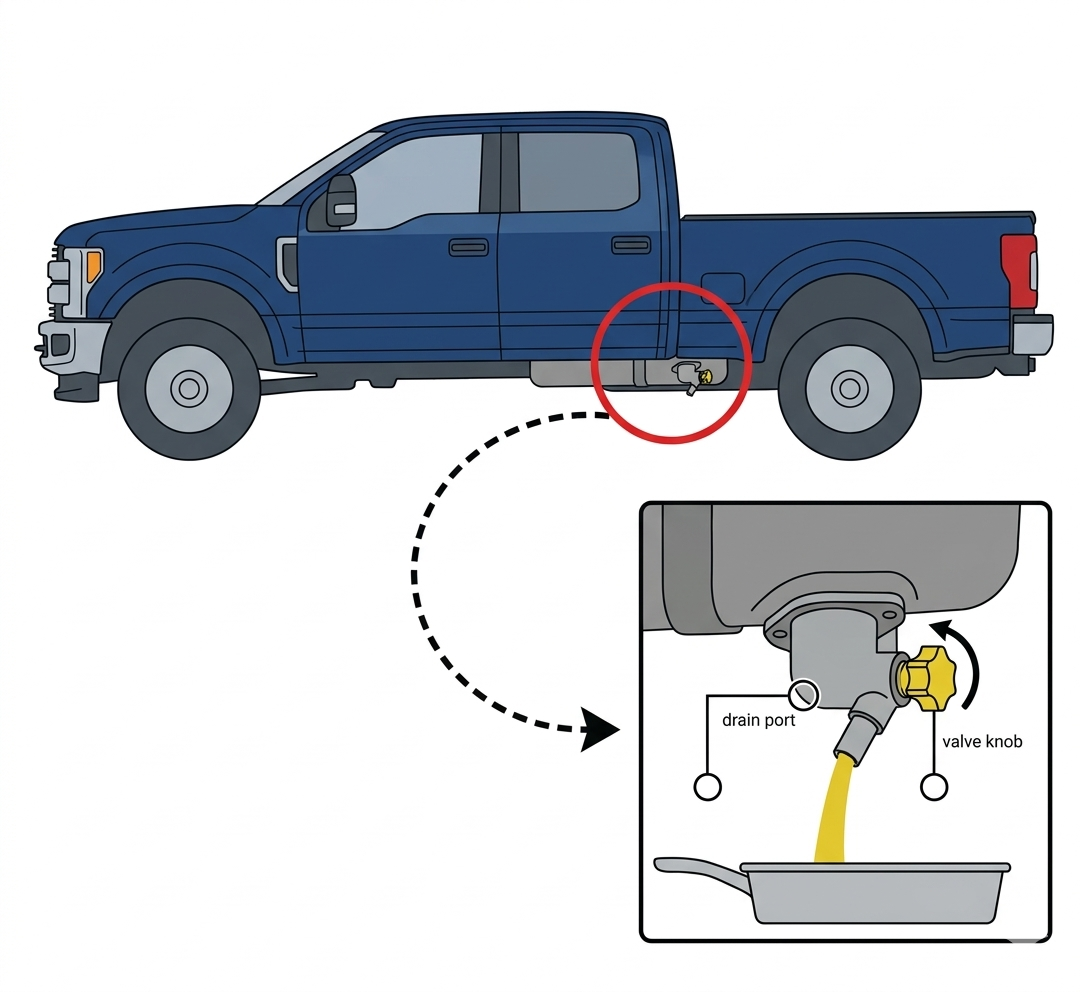
Professional Ford F250 fuel tank drainage showing the drain port location and proper procedure
Common Critical Reasons for Draining a Ford F250 Fuel Tank
Wrong Fuel Contamination - The Most Common Emergency
The most urgent and time-sensitive reason to drain a fuel tank is wrong fuel contamination. Ford F250 trucks are available in both gasoline and diesel variants, with the diesel Power Stroke engines being extremely popular for their torque and towing capabilities. Unfortunately, misfueling incidents occur regularly at service stations, especially when drivers are distracted, tired, or operating rental vehicles they're unfamiliar with. Putting gasoline in a diesel F250, or diesel in a gasoline F250, creates an immediate emergency situation requiring complete fuel system drainage before even attempting to start the engine.
Diesel engines, which power the majority of F250 Super Duty trucks, are particularly vulnerable to gasoline contamination. Diesel fuel serves dual purposes in these engines - it provides combustion energy and acts as a critical lubricant for the high-pressure fuel injection pump and precision injectors. When gasoline enters a diesel fuel system, it strips away this essential lubrication, causing direct metal-on-metal contact in components engineered to tolerances of mere microns. Running a diesel F250 on gasoline-contaminated fuel can completely destroy the injection pump, fuel injectors, and fuel lines within just minutes of operation, resulting in repair bills that can easily exceed fifteen thousand dollars.
Conversely, putting diesel in a gasoline F250 causes different but still serious problems including fouled spark plugs, clogged fuel filters, rough running, excessive smoke, and potential damage to catalytic converters and oxygen sensors. While generally less catastrophic than gasoline in diesel, it still requires immediate professional drainage to prevent expensive repairs.
Contaminated or Degraded Fuel Issues
Fuel quality problems represent another common reason for tank drainage. Gasoline and diesel fuel don't remain chemically stable indefinitely. Fuel that sits unused for extended periods undergoes oxidation and chemical breakdown, forming varnishes, gums, and deposits that clog fuel filters, injectors, and fuel system passages. This is particularly problematic in F250 trucks used seasonally for farming, construction work trucks that experience slow periods, or recreational vehicles stored during winter months.
Water contamination poses another serious threat to F250 fuel systems. Water enters fuel tanks through condensation when tanks are stored partially empty, through poor-quality fuel from compromised underground storage tanks, or through damaged fuel caps allowing rain ingress. Water in diesel fuel is especially problematic as it causes corrosion, supports microbial growth (diesel bug), freezes in cold weather blocking fuel lines, and prevents proper combustion leading to rough running and loss of power.
Contaminated fuel manifests through various warning symptoms including rough or unstable idling, poor acceleration and reduced power, engine misfires and hesitation, difficulty starting especially when cold, reduced fuel economy, and check engine lights with fuel system related codes. When contamination reaches severe levels, complete tank drainage and comprehensive fuel system cleaning becomes absolutely necessary to restore proper performance and prevent expensive component damage.
Fuel System Repairs and Component Replacement
Certain maintenance and repair procedures absolutely require emptying the fuel tank as a mandatory safety requirement before work can begin. These situations include fuel pump replacement, fuel tank repair or replacement due to damage or corrosion, fuel sending unit service or replacement, addressing fuel leaks anywhere in the system, and comprehensive tank cleaning for severe contamination. Working on any fuel system component with fuel present creates unacceptable fire and explosion hazards that professional technicians systematically eliminate through proper drainage procedures and safety protocols.
Long-Term Storage Preparation
Preparing a Ford F250 for extended storage periods exceeding three months often involves either draining the fuel tank completely or adding commercial fuel stabilizer to preserve fuel quality during dormancy. Many owners and fleet managers prefer complete drainage to eliminate any risk of fuel degradation, particularly for storage periods exceeding six months or when the truck will be stored in uncontrolled temperature environments.
Critical Safety Considerations Before Attempting Fuel Drainage
Fuel drainage is inherently dangerous work that demands serious safety precautions and respect for the hazards involved. Both gasoline and diesel fuel are highly flammable liquids, and their vapors pose explosion risks. Understanding and respecting these hazards is absolutely non-negotiable before attempting any fuel system work.
Fire and Explosion Risk: Gasoline vapors are heavier than air and can ignite from the smallest spark source, including static electricity discharge, electrical switches, pilot lights, hot exhaust components, and grinding or welding sparks. Even diesel fuel, while less volatile than gasoline, produces flammable vapors and can ignite when heated or exposed to open flames. A single spark in a fuel vapor-rich environment can cause catastrophic explosions resulting in severe burns, property destruction, and death.
Toxic Vapor Exposure: Fuel vapors contain benzene, toluene, and other toxic compounds that cause immediate symptoms including dizziness, nausea, severe headaches, confusion, and loss of consciousness when inhaled in enclosed or poorly ventilated spaces. Prolonged or repeated exposure causes serious long-term health effects including organ damage, neurological problems, and increased cancer risk.
Skin and Eye Contact Hazards: Direct contact with gasoline or diesel fuel causes immediate skin irritation and can result in chemical burns with extended exposure. Both fuels readily penetrate skin and enter the bloodstream, potentially causing systemic toxicity. Fuel splashed in eyes causes severe pain and can result in permanent vision damage without immediate and proper emergency flushing for at least 15 minutes.
Environmental Contamination and Legal Liability: Spilled fuel contaminates soil and groundwater, creating environmental hazards that persist for years and migrate to affect neighboring properties and water supplies. Improper fuel disposal violates federal and state environmental regulations, resulting in substantial fines often exceeding ten thousand dollars, mandatory cleanup costs, and potential criminal charges for serious violations.
Carbon Monoxide Poisoning: Running vehicle engines during drainage procedures, even outdoors, produces deadly carbon monoxide gas. This colorless, odorless gas causes confusion, unconsciousness, and death with no warning symptoms before collapse occurs. Even garage spaces with open doors don't provide adequate ventilation to prevent dangerous CO accumulation.
Professional fuel drainage services utilize explosion-proof fuel transfer equipment, industrial ventilation systems or work in appropriate outdoor environments, comprehensive personal protective equipment including respirators and chemical-resistant clothing, approved fuel storage and transportation containers meeting DOT regulations, specialized non-sparking tools, and comprehensive insurance covering potential incidents. The vast majority of vehicle owners lack access to this specialized safety equipment, proper training, and the controlled environments necessary for safe fuel handling.
Professional Methods to Drain a Ford F250 Fuel Tank
Professional automotive technicians and mobile fuel rescue specialists employ several proven methods to safely drain F250 fuel tanks, carefully selecting the most appropriate approach based on the specific situation, fuel contamination level, available equipment, and whether the truck is at a shop or requires mobile service.
Method 1: Fuel Drain Valve Method (Newer F250 Models)
Many newer Ford F250 models, particularly 2017 and later, feature a factory-installed fuel tank drain valve specifically designed to facilitate fuel drainage for service procedures. This engineered solution provides the safest and most efficient drainage method when present. The procedure involves locating the drain valve typically positioned on the bottom or side of the fuel tank, accessing the valve which may require removing protective shields or skid plates, connecting approved fuel collection equipment to the valve fitting, opening the valve and allowing gravity to drain fuel into proper containers, monitoring the process to prevent spills and ensure complete drainage, and closing the valve securely and reinstalling any removed components.
This method is ideal when available as it minimizes contamination risk, reduces labor time significantly, eliminates the need for tank removal, and utilizes Ford's engineered solution designed specifically for this purpose. However, not all F250 models feature this drain valve, and older trucks require alternative drainage approaches.
Method 2: Fuel Pump Access Method
A common professional approach involves accessing the fuel pump assembly to drain the tank using either the vehicle's own fuel system or external pumps. Ford F250 trucks typically position the fuel pump inside the tank, accessible from above by removing the truck bed or through access panels depending on the model year. This method involves removing the truck bed by unbolting and lifting, or accessing through service panels, disconnecting the fuel pump electrical connector to prevent accidental activation, removing fuel line connections while containing spillage, using either the vehicle's fuel pump or a hand-operated transfer pump to move fuel to approved containers, continuing until the tank is completely empty, and reconnecting all components properly with new seals where required.
This approach is relatively efficient compared to complete tank removal, minimizes fuel spillage risk when performed correctly, and doesn't require lowering the heavy and awkward fuel tank. However, it requires significant disassembly, proper tools, and detailed knowledge of F250 fuel system connections which vary by model year and configuration.
Method 3: Complete Fuel Tank Removal
For severe contamination requiring tank cleaning, tank damage necessitating replacement, or when other methods aren't feasible, complete tank removal provides the most comprehensive solution. This extensive process involves safely lifting and supporting the vehicle on professional-grade jack stands or a hydraulic lift, disconnecting fuel lines, electrical connections, and vapor recovery lines, removing exhaust components if they interfere with tank removal, removing the tank mounting straps or support brackets, carefully lowering the heavy tank (F250 tanks can weigh over 200 pounds when full) while managing remaining fuel, draining the tank completely in a controlled environment, inspecting the tank interior and all components, cleaning thoroughly or replacing if necessary, and reinstalling with all new gaskets, seals, and hardware.
While time-intensive, labor-heavy, and requiring significant mechanical skill, this method ensures absolutely complete fuel removal, allows for comprehensive fuel system inspection and cleaning, provides access for tank repairs or replacement, and permits replacement of the fuel pump, sending unit, and other tank-mounted components during the same service.
Method 4: Mobile Emergency Fuel Drainage Service
For wrong fuel emergencies or roadside situations, specialized mobile fuel drainage services bring professional equipment directly to your F250's location. This increasingly popular service includes on-site fuel system drainage using explosion-proof portable pumps, complete fuel line flushing to remove all contaminated fuel, fuel filter replacement when necessary, proper contaminated fuel disposal according to regulations, system refilling with correct fuel type, and comprehensive testing to ensure proper operation before leaving.
Mobile services offer critical advantages including immediate response preventing you from starting the engine with wrong fuel, no towing costs which can exceed several hundred dollars, convenience of service at your location whether home, work, or roadside, and immediate resolution getting you back on the road quickly. When you need expert assistance, professional fuel drainage services provide the fastest and safest solution.
Why Professional Assistance is Strongly Recommended
While some mechanically-skilled F250 owners consider attempting DIY fuel drainage, numerous factors make professional service the strongly recommended choice for the vast majority of situations, particularly for wrong fuel emergencies.
Specialized Safety Equipment: Professional services utilize explosion-proof fuel transfer equipment specifically engineered and certified for safe fuel extraction. These specialized pumps incorporate features preventing sparks and safely managing fuel vapors - absolutely critical when working with highly flammable liquids. Standard hardware store pumps, household siphons, or shop vacuums completely lack these essential safety features and create unacceptable hazards that have resulted in numerous fires, explosions, and deaths.
Model-Specific Expertise: Ford F250 fuel systems vary significantly across generations, model years, and powertrain configurations. Professional technicians maintain current knowledge of these differences and know the specific access points, connection types, drainage procedures, and potential complications for each variant. They can quickly identify whether your F250 uses a single or dual tank configuration, locate the correct fuel pump access method, determine if a factory drain valve is present, and select the most efficient and safest drainage approach for your specific truck.
Proper Fuel Disposal: Both gasoline and diesel are classified as hazardous waste requiring proper disposal according to strict federal and state environmental regulations. Professional services maintain the necessary permits, approved storage and transportation containers, and established disposal procedures to handle contaminated fuel legally and safely. Attempting to dispose of fuel yourself risks substantial fines, environmental citations, and cleanup liability that can total tens of thousands of dollars.
Complete Contamination Removal: Wrong fuel situations require more than just tank drainage - the entire fuel system including lines, rails, filters, and injectors must be properly flushed to remove all contamination. Even trace amounts of wrong fuel remaining in the system can cause problems when fresh correct fuel is added. Professional services perform comprehensive system flushing ensuring complete contamination removal.
Time and Convenience: Professional mobile fuel drainage services come directly to your location, whether at home, work, roadside, or anywhere your F250 is stranded. This eliminates expensive towing charges and gets you back on the road quickly. What might take an inexperienced person an entire day of struggle, professionals complete safely in one to two hours.
Need help right now? Contact Rapid Fuel Rescue for 24/7 emergency fuel drainage.
Understanding Ford F250 Fuel System Specifics
Ford F250 fuel systems have evolved significantly across generations, and understanding your specific truck's configuration is essential for proper drainage procedures and realistic expectations.
Fuel Tank Capacity Variations
F250 fuel tank capacity varies substantially based on cab configuration, bed length, and model year. Standard cab short bed models typically feature a 29-gallon rear-mounted tank. Crew cab configurations commonly use either a 34-gallon or 40-gallon rear-mounted tank. Some F250 models, particularly older generations, offered dual tank configurations with a rear tank and a midship tank, requiring drainage of both systems for complete fuel removal. Optional extended-range tanks available on certain models can hold up to 48 gallons or even 55 gallons in aftermarket configurations.
Fuel System Pressure Considerations
Ford F250 fuel systems operate under significant pressure that must be properly relieved before any line disconnection. Gasoline F250 models typically operate at 55-65 PSI fuel pressure. Power Stroke diesel models operate at dramatically higher pressures, with common rail systems reaching 25,000+ PSI at the injectors and 60-90 PSI in supply lines. Before disconnecting any fuel lines, trained technicians must relieve this pressure using proper procedures to prevent dangerous fuel spray that can cause fires, injuries, and contamination.
The Complete Professional Fuel Drainage Process
Understanding the full professional drainage process helps set proper expectations and appreciate the complexity and safety measures involved in professional service.
Initial Assessment: Technicians begin by verifying the reason for drainage, identifying whether wrong fuel is present and what type, checking fuel contamination level and tank capacity, assessing the amount of remaining fuel, and identifying your specific F250 model year, engine type, and configuration. This critical information guides the drainage approach selection and provides accurate time estimation.
Safety Preparation: The vehicle is positioned on level ground in a well-ventilated outdoor area or properly ventilated shop space. All potential ignition sources are identified and eliminated from the immediate work area. Fire extinguishers rated for Class B fires are positioned within immediate reach. Appropriate personal protective equipment including safety glasses, chemical-resistant gloves, and respirators are donned. Warning signs and barriers are established if working in areas with vehicle or foot traffic.
System Access: Technicians access the fuel system using the most appropriate method for your F250's configuration - utilizing factory drain valve if present, removing truck bed or access panels to reach the fuel pump, or disconnecting accessible fuel line connection points at strategic locations.
Fuel Extraction: Using explosion-proof transfer equipment, contaminated fuel is carefully pumped from the tank into approved DOT-certified storage containers. The process continues until the tank is completely empty or reaches the required drainage level for the specific service. Throughout extraction, technicians continuously monitor for any leaks, ensure proper vapor management, and verify safe fuel collection.
System Flushing: After tank drainage, complete fuel line flushing removes any remaining contaminated fuel from supply lines, fuel rails, filters, and in severe wrong fuel cases, from the high-pressure injection system. This critical step prevents trace contamination from mixing with fresh fuel and causing continued problems.
Component Inspection and Replacement: Professional service includes thorough inspection of fuel pump condition and operation, examination of fuel filters for contamination or damage requiring replacement, assessment of fuel lines and connections for wear, cracks, or leaks, and evaluation of whether the fuel tank requires internal cleaning or replacement.
System Reassembly and Testing: All components are reconnected properly using new seals and gaskets where required. Fuel filters are replaced as needed, particularly after contamination events. The system is refilled with the correct fuel type if the service includes refueling. Comprehensive testing verifies no leaks are present, fuel pressure meets specifications, and the engine runs properly on the fresh fuel.
Prevention Strategies: Avoiding Future Fuel Problems
While knowing how to drain your F250's fuel tank is valuable knowledge, implementing prevention strategies to avoid issues requiring drainage is far more valuable.
Misfueling Prevention: Place a highly visible permanent label on your fuel door indicating the correct fuel type in large letters. This simple five-dollar preventive measure prevents thousands in potential damage. If you operate both gasoline and diesel vehicles, develop a consistent fueling routine and double-check the pump nozzle before fueling. Many fleet managers use color-coded fuel cap covers to provide immediate visual confirmation of fuel type.
Fuel Quality Maintenance: Purchase fuel exclusively from reputable branded stations with high customer volume ensuring fresh fuel. Avoid questionable discount stations or rarely-used rural stations where underground tanks may contain old or contaminated fuel. Add commercial fuel stabilizer if your F250 will sit unused for periods exceeding 30 days. Keep the tank as full as practical during storage periods to minimize interior tank surface area where condensation can form. Run the vehicle regularly, even if just for 15-20 minutes, to circulate fresh fuel and prevent stagnation.
Regular Maintenance: Replace fuel filters at Ford's recommended service intervals, typically every 30,000 miles for gasoline engines and 15,000-20,000 miles for Power Stroke diesel engines. Consider professional fuel system cleaning service every 50,000 miles to prevent buildup and maintain optimal performance. Address any check engine lights, performance issues, or unusual symptoms promptly before minor problems escalate into major issues requiring complete fuel drainage and expensive repairs.
Cost Considerations and Service Investment
Professional Ford F250 fuel tank drainage costs vary based on several important factors including your geographic location and local labor rates, the specific drainage method required, whether tank removal is necessary, the total amount of fuel requiring drainage and disposal, time of service with emergency after-hours service commanding premium rates, and whether additional services like fuel filter replacement or system flushing are required.
Typical professional mobile drainage service ranges from four hundred fifty to eight hundred dollars for standard on-site drainage without tank removal. Services requiring complete tank removal generally cost nine hundred to eighteen hundred dollars including labor and reassembly. Emergency wrong fuel drainage typically ranges from five hundred fifty to one thousand dollars depending on response time, location, and time of day.
While these costs might initially seem substantial, they represent minimal investment compared to the catastrophic expense of engine damage from running wrong fuel through your F250's injection system. A destroyed Power Stroke high-pressure fuel pump alone costs three thousand to five thousand dollars. Complete injector replacement on a diesel F250 can exceed twelve thousand dollars. A damaged fuel system requiring pump, injectors, lines, and rail replacement can total twenty thousand dollars or more. Professional drainage service represents true economy by preventing these devastating repair bills.
When to Immediately Call Professional Fuel Drainage Services
Certain situations absolutely require immediate professional assistance rather than any delay or DIY attempts. If you've put wrong fuel in your F250 and have not started the engine, stop immediately and call professionals for same-day emergency service. Every minute counts in preventing contamination from spreading through the fuel system. If you've briefly started or driven on wrong fuel even for a few seconds, immediately shut off the engine and call for professional drainage and comprehensive system inspection. For heavily contaminated fuel causing severe performance issues, rough running, or loss of power, professional cleaning ensures complete contamination removal and prevents component damage. When preparing for major fuel system repairs or component replacement, professional drainage eliminates fire hazards and ensures safe working conditions. If you lack proper safety equipment, approved storage containers, legal disposal methods, or appropriate workspace, professional service is your only safe and legal option.
Protect Your F250 Investment: Take Action Now
Your Ford F250 Super Duty represents a substantial financial investment, often forty thousand to eighty thousand dollars or more for newer models. Proper fuel system care protects this investment while ensuring the reliable performance you depend on for work, recreation, and transportation. Whether you're facing a wrong fuel emergency, dealing with contaminated fuel issues, or preparing for necessary maintenance work, professional fuel tank drainage services provide safe, efficient, guaranteed results that DIY methods simply cannot match.
Don't risk your F250's expensive engine components, your personal safety, environmental violations and fines, or the time and frustration of improper drainage attempts. Professional mobile fuel drainage services bring specialized equipment, extensive knowledge, proper safety protocols, and legal disposal capability directly to your location, resolving fuel problems quickly and correctly the first time.
Time is absolutely critical in wrong fuel situations. Every minute that contaminated fuel sits in your system increases the risk of contamination spreading, corrosion beginning, and damage occurring if the engine is accidentally started. If you've misfueled your Ford F250, do not attempt to start the engine under any circumstances and contact professional fuel drainage services immediately for emergency response.
For planned maintenance, contamination issues, or fuel quality problems, scheduling professional service ensures the work is performed safely, completely, and in compliance with all regulations. Your F250 deserves the expert care that keeps it running strong for hundreds of thousands of miles, and professional fuel system services provide the expertise and equipment necessary to deliver that level of care.
Ford F250 owners throughout Perth can rely on professional fuel rescue Perth services, emergency wrong fuel Perth response teams, and expert wrong fuel help available around the clock. Mobile fuel drainage specialists bring professional equipment directly to your location anywhere in Perth and surrounding areas.