Wrong Fuel in Diesel Car: Everything You Need to Know
Putting wrong fuel in a diesel car is one of the most common and costly mistakes drivers make at the petrol station. It happens thousands of times every day around the world, a moment of distraction, an unfamiliar rental vehicle, or simply grabbing the wrong nozzle under pressure. If you've just realised you've put petrol in a diesel car, or you're trying to understand the risks before they happen to you, this comprehensive guide covers everything from what occurs inside your engine to the safest path to recovery.
Why Petrol in a Diesel Engine Is So Damaging
Diesel and petrol engines operate on fundamentally different principles, which is why mixing them creates serious mechanical problems. A diesel engine relies on compression ignition, the fuel-air mixture is compressed to a point where it ignites spontaneously. Diesel fuel also serves a critical secondary function: it lubricates the high-pressure fuel pump and injectors as it passes through them. These precision components operate with incredibly fine tolerances and depend entirely on diesel's inherent lubricity to function without damage.
Petrol is a solvent, not a lubricant. When petrol enters a diesel fuel system, it immediately begins stripping away the protective film that diesel normally provides. Metal components that were designed to glide smoothly against each other with microscopic precision now experience direct metal-on-metal contact. The damage begins within minutes of the engine running, and the longer the contaminated fuel circulates, the more extensive and expensive the destruction becomes.
Beyond lubrication failure, petrol has a much lower ignition temperature and behaves very differently during compression. In a diesel engine, this mismatch causes misfiring, rough running, loss of power, and eventually complete engine shutdown. The longer you drive on contaminated fuel, the more components are affected, from the high-pressure fuel pump (one of the most expensive parts in a modern diesel) to the injectors, fuel rail, and filters.
How Much Petrol Is Too Much?
A question many drivers ask immediately is whether a small amount of petrol contamination is truly dangerous. The honest answer is that even relatively small percentages of petrol in diesel fuel can cause measurable damage, particularly to the high-pressure fuel pump. Most automotive engineers and fuel specialists agree that contamination levels above five percent should be treated as a serious concern requiring professional attention. With a typical diesel tank holding between 60 and 80 litres, this threshold is reached surprisingly quickly.
If you accidentally filled just ten or fifteen litres of petrol into a diesel tank that was already half full of diesel, the dilution may sound modest, but you are still well into the danger zone. The only truly safe approach is to assume any level of petrol contamination requires professional drainage and do not drive the vehicle until the fuel system has been properly flushed and refilled with the correct diesel fuel.
Immediate Warning Signs of Wrong Fuel in a Diesel Car
If the wrong fuel has already been pumped into a running diesel engine, the vehicle will typically give clear distress signals. Recognising these symptoms early and stopping immediately is critical to containing the damage:
- Unusual smoke from the exhaust: White or grey smoke that appears abnormal compared to normal diesel exhaust is a common early indicator of fuel contamination.
- Rough, uneven idling: The engine may feel noticeably shaky or unstable, unable to maintain smooth revs.
- Loss of power and acceleration: The car will feel sluggish and unresponsive, struggling particularly at higher speeds or under load.
- Engine misfires and hesitation: Stuttering, jerking, or brief cuts in power signal that combustion is not occurring correctly.
- Difficulty starting or engine cut-out: As contamination spreads through the system, the engine may refuse to start or shut down entirely without warning.
- Warning lights on the dashboard: The engine management light, fuel system warning, or other alerts may illuminate as sensors detect abnormal conditions.
If you notice any of these symptoms after fuelling, pull over safely as soon as possible and switch off the engine. Do not attempt to restart it. Every additional kilometre driven on contaminated fuel dramatically increases repair costs and the risk of permanent damage.
What to Do Immediately If You Put Petrol in a Diesel Car
The most important thing to understand is that your response in the first few minutes determines whether you face a straightforward fuel drainage job or a five-figure repair bill. Follow these steps as calmly and quickly as possible:
Step 1, Do Not Start the Engine
If you realise the mistake while still at the pump or before leaving the forecourt, this is the best possible position to be in. Do not turn the ignition key. Do not press the start button. Even briefly running a modern diesel engine on contaminated fuel can begin damaging the high-pressure fuel pump. Keep the ignition completely off.
Step 2, Move the Vehicle Safely If Possible
If the car has not been started, you may be able to push it or have it towed to a safe area away from fuel pump nozzles and forecourt traffic. Inform the petrol station staff of what has occurred, they deal with this situation regularly and can assist or provide guidance.
Step 3, Call a Professional Fuel Rescue Service
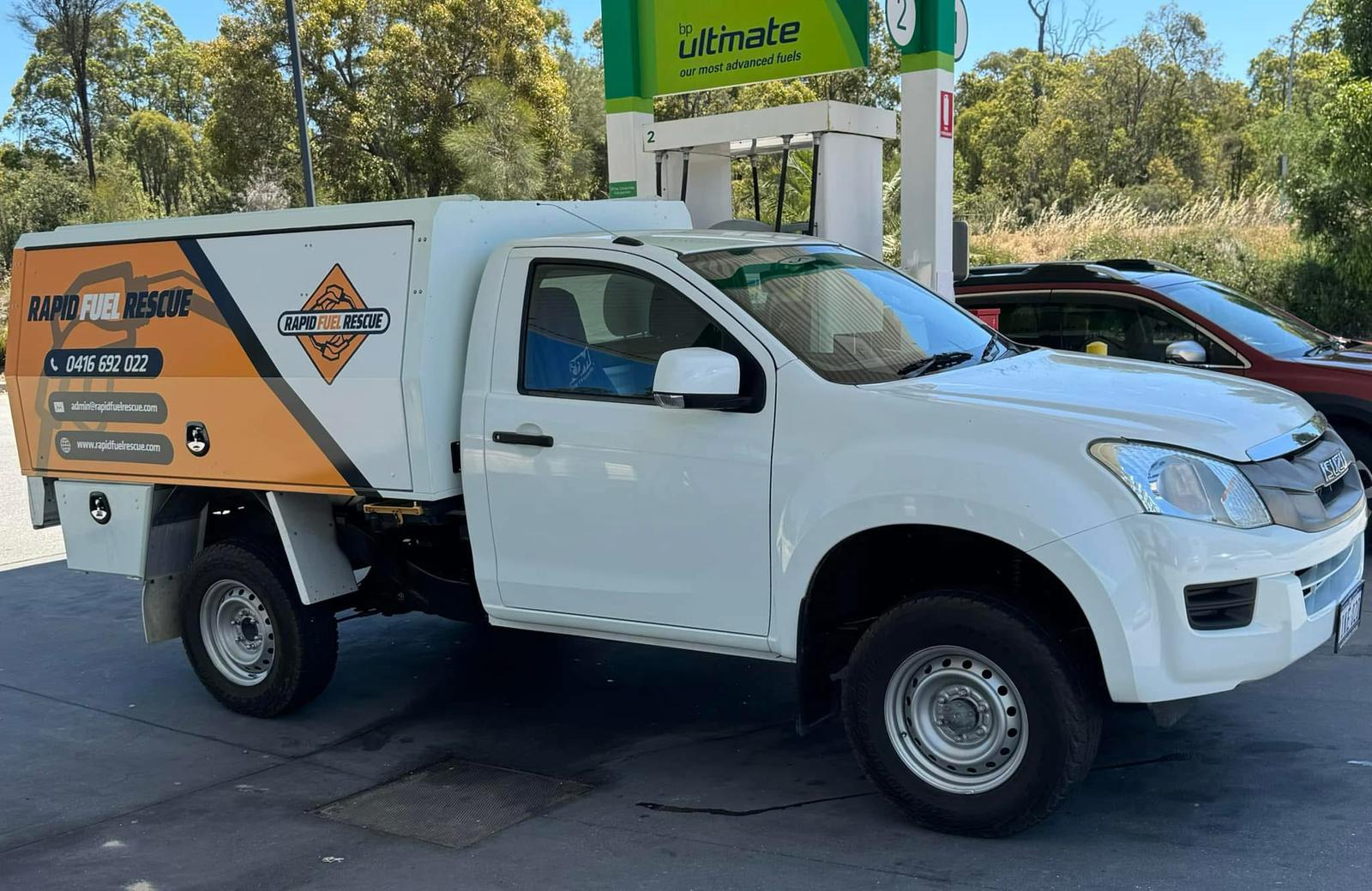
This is not a situation for improvised DIY solutions. Attempting to drain a modern diesel fuel tank without the proper equipment is dangerous and often ineffective. Mobile wrong fuel rescue specialists carry explosion-proof pumps, correct drainage tools specific to your vehicle, and the equipment needed to flush and refill the entire fuel system properly. They can come directly to your location, whether that's a petrol station forecourt, a car park, or the side of the road.
Step 4, Do Not Add More Diesel to Dilute the Petrol
A common instinct is to fill the rest of the tank with diesel in hopes of diluting the contamination to a safe level. This does not solve the problem and in fact makes subsequent drainage more time-consuming and expensive. Leave the tank as it is and wait for professional assistance.
Need help right now? Contact Rapid Fuel Rescue for 24/7 emergency fuel drainage.
The Professional Fuel Drainage Process
When a qualified fuel rescue technician arrives, they will carry out a structured process to safely remove all contaminated fuel and restore your diesel system to correct working order. Understanding what this involves helps set realistic expectations and confirms why professional service is worth every cent compared to the alternative.
The technician will first confirm the contamination by checking the fuel type and assessing the situation. They will then use specialist equipment to drain the fuel tank completely, removing every litre of contaminated mixture. For vehicles where petrol contamination has already circulated through the system, particularly if the engine was started, a thorough flush of the fuel lines, fuel rail, and injector circuit is necessary to remove all traces of petrol from the system.
The fuel filter will typically be replaced as a standard precaution, since petrol passes through it and can leave residue that affects future performance. Once drainage and flushing are complete, the tank is refilled with fresh, correct diesel fuel. The technician will then start the engine and run checks to confirm normal operation before the job is signed off. The entire process for an undamaged vehicle that has not been started typically takes between 45 minutes and two hours on-site.
What If the Engine Was Already Started or Driven?
If petrol contamination has already circulated through the diesel fuel system, the scope of work expands significantly. The high-pressure fuel pump is the most vulnerable and expensive component, on modern common-rail diesel engines, pump replacement alone is one of the most expensive repairs on the car. Injectors, which are equally precision-engineered, can also suffer damage from the solvent action of petrol and may require reconditioning or replacement.
In these cases, a professional fuel system inspection is essential before attempting to return the vehicle to service. Simply draining the tank and refilling with diesel will not address the damage already done to internal components. Driving a diesel with a contaminated or damaged high-pressure fuel pump risks metal particles circulating through the entire injection system, causing cascading failures that dramatically escalate repair costs. Perth drivers needing urgent wrong fuel assessment and recovery can reach specialist technicians 24 hours a day, seven days a week for immediate on-site response.
Cost of Fixing Wrong Fuel in a Diesel Car
The cost of professional wrong fuel recovery depends heavily on how quickly action is taken. If the mistake is caught before the engine is started, a complete mobile fuel drainage service costs a fraction of what engine damage would. If the engine was briefly started but not driven, costs remain manageable in most cases, depending on the extent of flushing required.
The picture changes dramatically once the vehicle has been driven on contaminated fuel. High-pressure fuel pump replacement is the most common major repair, and when combined with injector servicing, fuel rail flushing, and filter replacement, the bill quickly runs into the thousands. In severe cases, with complete pump failure and injector damage, the bill climbs higher again. This is why the advice to stop immediately and call for professional help cannot be overstated, every kilometre driven on wrong fuel is a kilometre closer to a catastrophic and avoidable repair bill.
Does Insurance Cover Wrong Fuel in a Diesel Car?
Standard comprehensive car insurance policies typically do not cover misfuelling as a default inclusion, since it is classified as driver error rather than an accident or external event. However, many breakdown and roadside assistance policies do include wrong fuel cover as a specific add-on, and some premium comprehensive policies include it automatically. It is worth checking your specific policy documents and calling your insurer as soon as possible after the incident.
Some fleet management agreements and manufacturer extended warranty programs also include provisions for misfuelling incidents. If you have any form of breakdown assistance cover, contact the provider before calling a private recovery service, as they may dispatch a preferred contractor or reimburse costs up to a set limit. Keep all receipts and documentation from any professional fuel recovery service, as these will be required for any insurance or warranty claim.
How to Prevent Wrong Fuel in a Diesel Car
Prevention is always preferable to recovery. A handful of simple habits dramatically reduce the risk of putting petrol in a diesel car. The most effective physical solution is a misfuelling prevention device, a small mechanical insert fitted to the diesel filler neck that physically blocks the narrower petrol nozzle from entering, while allowing the wider diesel nozzle to pass. These devices are inexpensive and are available for most common diesel vehicles.
Beyond hardware solutions, developing conscious fuelling habits makes a significant difference. Always read the fuel label on the pump before inserting the nozzle. Make a habit of checking your vehicle's fuel cap, which will be labelled with the correct fuel type. Be particularly careful when driving an unfamiliar vehicle, rental cars, company vehicles, and newly purchased cars are disproportionately involved in misfuelling incidents simply because drivers have not yet built automatic recognition of the fuel type.
Conclusion: Act Fast, Call the Professionals
Wrong fuel in a diesel car is a stressful experience, but it is entirely recoverable if handled correctly and quickly. The key principles are simple: do not start the engine, do not attempt to drive, and call a professional mobile fuel rescue service immediately. The difference between catching the mistake at the pump and realising it twenty kilometres down the road can be the difference between a quick drain on the spot and a repair bill that rivals the value of the car itself.
Perth drivers have access to rapid, professional fuel drainage services available around the clock, with technicians who carry the correct equipment to handle wrong fuel incidents on-site at any location across the metropolitan area and beyond. If you're dealing with a wrong fuel emergency right now, stop the vehicle, switch off the ignition, and make the call, fast action is the single most important thing you can do to protect your diesel engine.